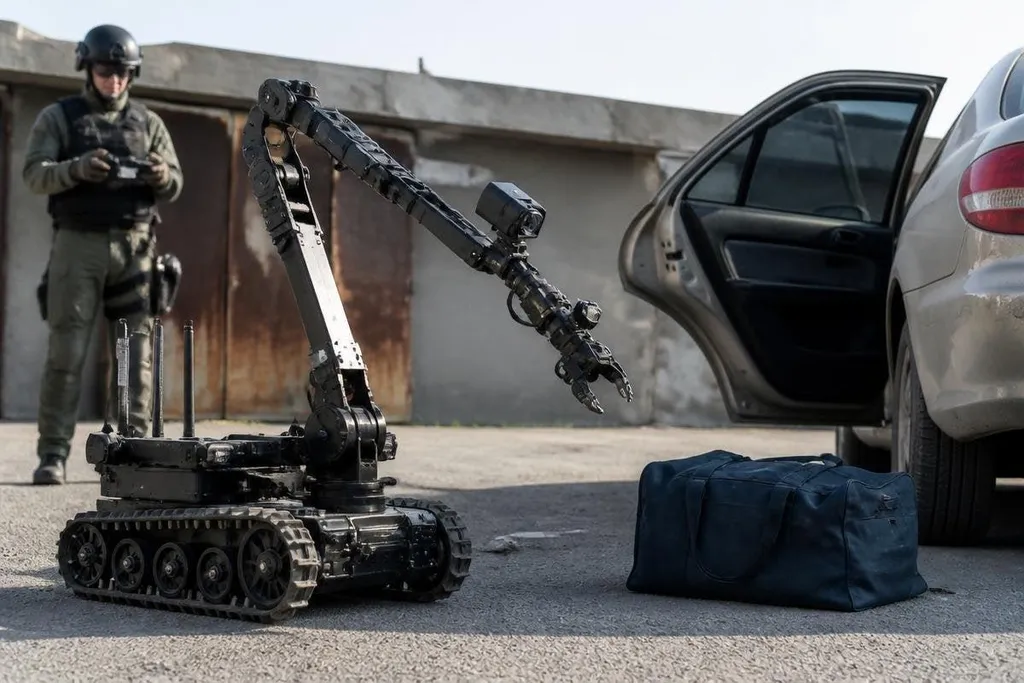
Bomb disposal robots are taking on more of the work that once put technicians close to a suspected device. Their progress comes from better control, clearer cameras, stronger robotic arms, and more ways to inspect an object from a distance.
The point is practical: give the operator more information and more control before anyone approaches the device.
Quick read
- Tracked bases can cross rough ground and carry heavy tools.
- Cameras, lights, and sensors help operators inspect a device remotely.
- Better software matters only when the radio link and hardware keep working.
What these robots do
A bomb disposal robot usually combines a tracked base, a robotic arm, cameras, and a control station. The base moves through buildings, roads, stairs, or uneven ground, depending on its design. Tracks spread the robot’s weight and give it grip on surfaces that may stop a wheeled vehicle.
The arm brings tools to the device. It may lift an object, move a suspicious package, cut a wire, place a disruptor, or open a door. An end effector is the tool fitted to the arm, so the operator can change the robot’s job without sending a person forward.
Cameras sit near the arm and around the base. Operators use them to judge distance, find wires, read labels, and watch the tool touch the device. A camera feed cannot answer every question, but it gives the team information without asking a technician to stand beside the hazard.
That distance changes the risk. It also changes the pace of the work, since the operator can pause, move back, change tools, or ask for another inspection before taking the next step.
Why the hardware is improving
The robot needs to carry useful equipment without becoming too large for the places where teams work. A stronger arm can move heavier objects, yet extra weight affects battery life, transport, and movement over stairs. Designers have to make those choices together rather than improve one part in isolation.
Sensors add another layer. Standard video gives the operator a view of the scene, while lights help in dark spaces and other sensors can add information that ordinary cameras cannot provide. X-ray equipment, for example, can help inspect the inside of a package when the team has the right system and a safe position for it.
The control system matters just as much as the arm. Small delays between the operator’s command and the robot’s movement can make delicate work harder. A control unit that shows several camera feeds, arm position, and system status in one place reduces the amount of information the operator must remember.
A bomb disposal robot’s software needs field evidence once the machine leaves a controlled test. Bomb disposal robotics reporting can tie its control claims to the test site and operator role before the next section examines what software still leaves to people.
Software helps, but it can't remove the hard parts
Modern control software can help the robot hold a position, limit arm movement, or return to a known location. These functions reduce accidental motion when the operator works near a device. They do not turn bomb disposal into a remote video game.
The operator still has to judge the object, the ground, the tool, and the effect of each action. A radio link can weaken behind walls or inside large structures.
Batteries run down. Tracks can lose contact with a step, and an arm can reach its movement limit at the wrong moment.
That is why claims about autonomy need care. A robot may drive along a planned route or keep an arm steady, but a suspicious device can present a new shape, a blocked path, or a tool problem that the software has not handled. The hard test is safe work in places that were not arranged for a demonstration.
What to check before buying one
A police, military, or emergency team comparing systems should check these points before focusing on a brochure:
- Reach and lift: Confirm the arm’s reach and payload with the tools the team will carry, not with an empty gripper.
- Movement: Test stairs, doorways, loose ground, and tight turns that match local callouts.
- Views: Count the cameras, check their low-light performance, and see how much of the arm disappears from view.
- Control link: Measure response delay and signal loss inside the buildings where the robot may work.
- Power and transport: Record battery swap time, charging needs, packed size, and the number of people needed to move it.
- Tool support: Ask which end effectors ship with the system and how the team gets replacements or repairs.
I’d judge a bomb disposal robot by the work it completes after the first plan fails, not by the smoothest video from a controlled test.
The next useful step is clearer public evidence: timed trials, failed runs, radio-loss tests, and records of how often operators need to take over. Until those details are available, better cameras and smarter control are helpful improvements, but the operator remains the system’s deciding part.